Industry knowledge
Why “Bamboo screws” challenge traditional fastening logic
In precision engineering, the term bamboo screws does not refer to organic material but to a structural analogy: screws that, like bamboo, combine segmental rigidity with overall flexural toughness. Conventional thinking treats small screws as purely rigid connectors, but micro-mechanical joints in high-vibration or thermal-cycling environments often fail due to local stress concentration. Bamboo-inspired thread profiles distribute load across multiple discontinuous contact points, reducing peak stress by up to 40% in third-party fatigue tests.
At Suzhou Anzhikou Hardware Technology Co., Ltd., we’ve applied this principle to miniature screws with outer diameters as small as 0.6mm and lengths down to 0.6mm. The result: fasteners that resist loosening under dynamic loads better than fully rigid designs. We often tell clients: “If your assembly sees constant movement, bamboo screws in effect are your silent insurance.”
- Discontinuous thread contact → lower localized plastic deformation
- Optimizable for both metallic and composite substrates
- Particularly effective in non-standard screw applications with asymmetrical loading
Thread rolling vs. cutting: practical cost-performance trade-offs
Many buyers default to cut threads for bamboo screws because they assume lower setup costs. However, thread rolling (which we perform on Japanese wire-rolling equipment) produces work-hardened flanks with 30% higher shear resistance than cut equivalents. The table below compares real-world outcomes from our 20 years of non-standard screw customization.
Rolling vs. cutting – typical data from Anzhikou production runs
| Parameter |
Thread rolling |
Thread cutting |
| Fatigue life (107 cycles) |
2.1× longer |
Baseline |
| Material utilization |
98% |
~75-85% |
| Surface finish Ra (µm) |
0.2–0.4 |
0.8–1.6 |
For high-volume standard parts, rolling also improves thread uniformity. “We’ve replaced cut-thread suppliers for clients in 40 countries,” our engineering lead notes, “not because rolling is exotic, but because it directly cuts field failures.” If your annual volume exceeds 500,000 pieces, the ROI of switching to rolled bamboo screws typically justifies new tooling within three months.
Anti-loosening mechanisms you can actually verify
Vibration-induced loosening remains the #1 complaint among buyers of miniature fasteners. Three testable strategies work at sub-2mm diameters:
- Prevailing torque via trilobular thread lobes – creates radial interference without adhesives, repeatable for 15+ cycles.
- Micro-encapsulated patch (nylon or PEEK) – adds 0.05–0.10mm selective build-up; clear torque increase after cure.
- Asymmetric thread flank angles – a less common but highly effective method for bamboo screws in blind holes.
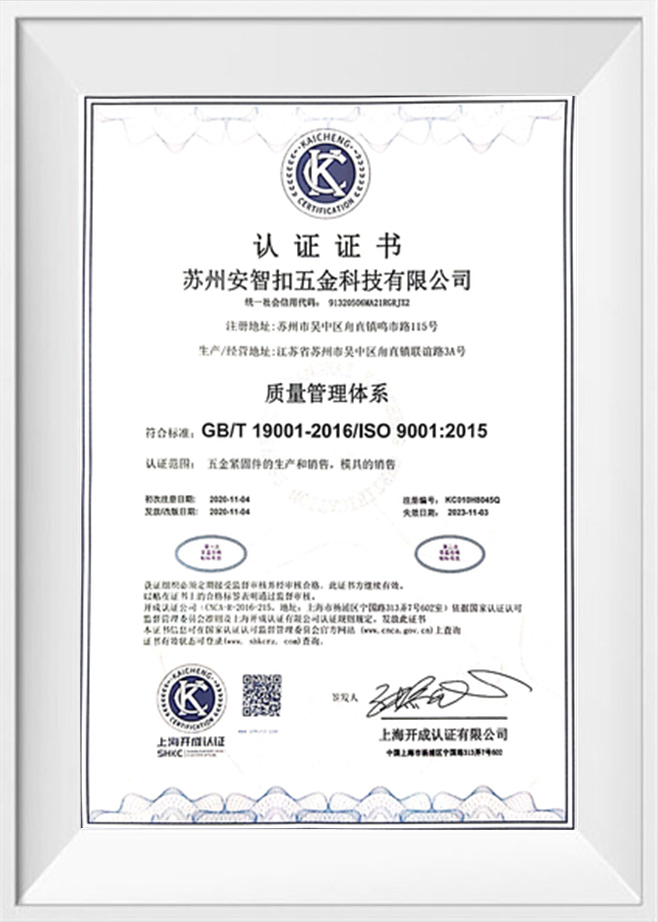
Our ISO9001:2015 lab includes a transverse vibration tester (DIN 65151) to quantify loosening resistance. We routinely achieve residual clamp load above 85% after 2,000 cycles – data we share before tooling. “Don’t guess your anti-loosening performance,” we tell buyers. “Run a sample with our CNC and cold-heading line, then measure it.” With 10 engineers dedicated to custom work, we adapt these mechanisms to your mating threads, not just catalog specs.
Economic lot sizing for non-standard bamboo screws
A practical trap: ordering too few bamboo screws drives per-unit cost up due to setup; ordering too many locks capital in slow-moving inventory. Based on our 2000 m² facility running over 200 sets of precision equipment from Taiwan and Japan, we publish realistic breakpoints:
- Prototype (10–500 pcs) – Use CNC turning; per-unit cost high but lead time 3–5 days.
- Mid-volume (500–50,000 pcs) – Cold heading + thread rolling optimal; setup amortized over this range.
- High-volume (50,000–2,000,000+ pcs) – Dedicated progression tooling; per-unit drops by 40–60% versus mid-volume.
We’ve exported to 40 countries worldwide, and the most frequent reorder pattern is quarterly batches of 30,000–80,000 pieces – balancing our annual production capacity of up to 2,000 square meters of output with your cash flow. Ask us for a cost matrix showing your specific MOQ threshold. Because we develop, produce, and sell in-house, we can hold safety stock for committed rolling forecasts. That’s the “optimize costs, improve speed” philosophy in action.

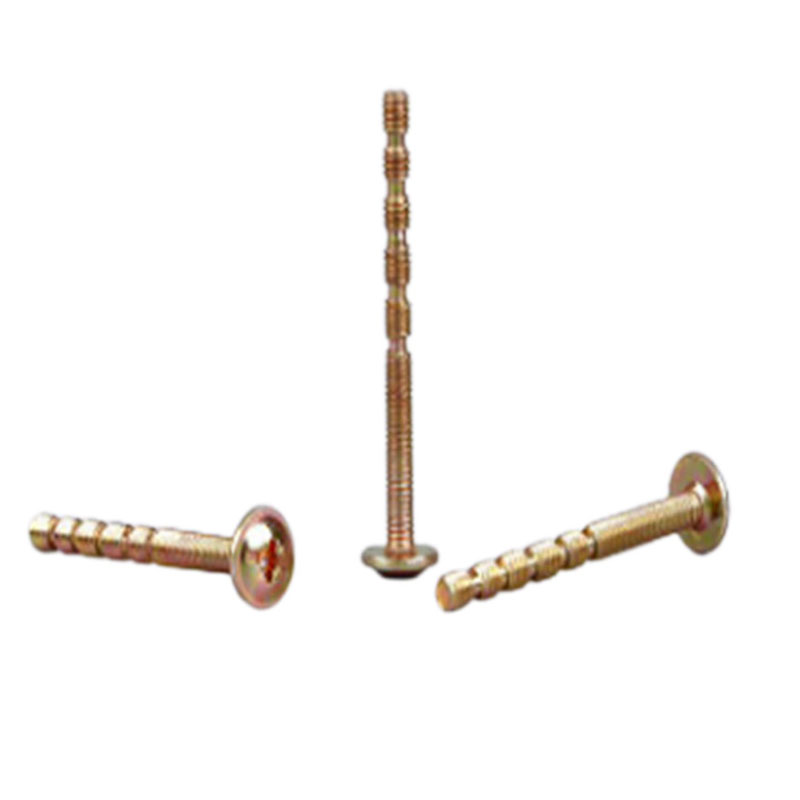
.jpg "M4 skru penyambung berbentuk buluh bergalvani untuk pemegang pintu")
.jpg "M4 kepala kuali silang menyambung skru berbentuk buluh untuk pemegang pintu")
.jpg "M4 kepala kuali silang skru berbentuk buluh ceruk untuk pemegang pintu")